


TREATMENT
Thyroid Radiofrequency Ablation (RFA)
TREATMENT
Thyroid Radiofrequency Ablation (RFA)
Thyroid Nodules and a Non-Surgical Alternative
At Century ENT, we are proud to offer Thyroid Radiofrequency Ablation (RFA) as an innovative, non-surgical option for the treatment of thyroid nodules.
The thyroid is a butterfly-shaped gland located at the front of the neck, just below the Adam’s apple. It plays a vital role in regulating heart rate, blood pressure, metabolism, and temperature. When the thyroid develops abnormal growths — called nodules — they are most often benign, but can still cause uncomfortable symptoms including difficulty swallowing, a sensation of pressure in the throat, hoarseness, or visible swelling at the base of the neck.
While surgery has historically been the standard treatment for problematic thyroid nodules, it carries risks including scarring, potential damage to surrounding structures, and in some cases, the need for lifelong thyroid hormone replacement. Thyroid RFA offers a minimally invasive alternative that treats the nodule effectively while preserving healthy thyroid tissue.
What Is Thyroid Radiofrequency Ablation?
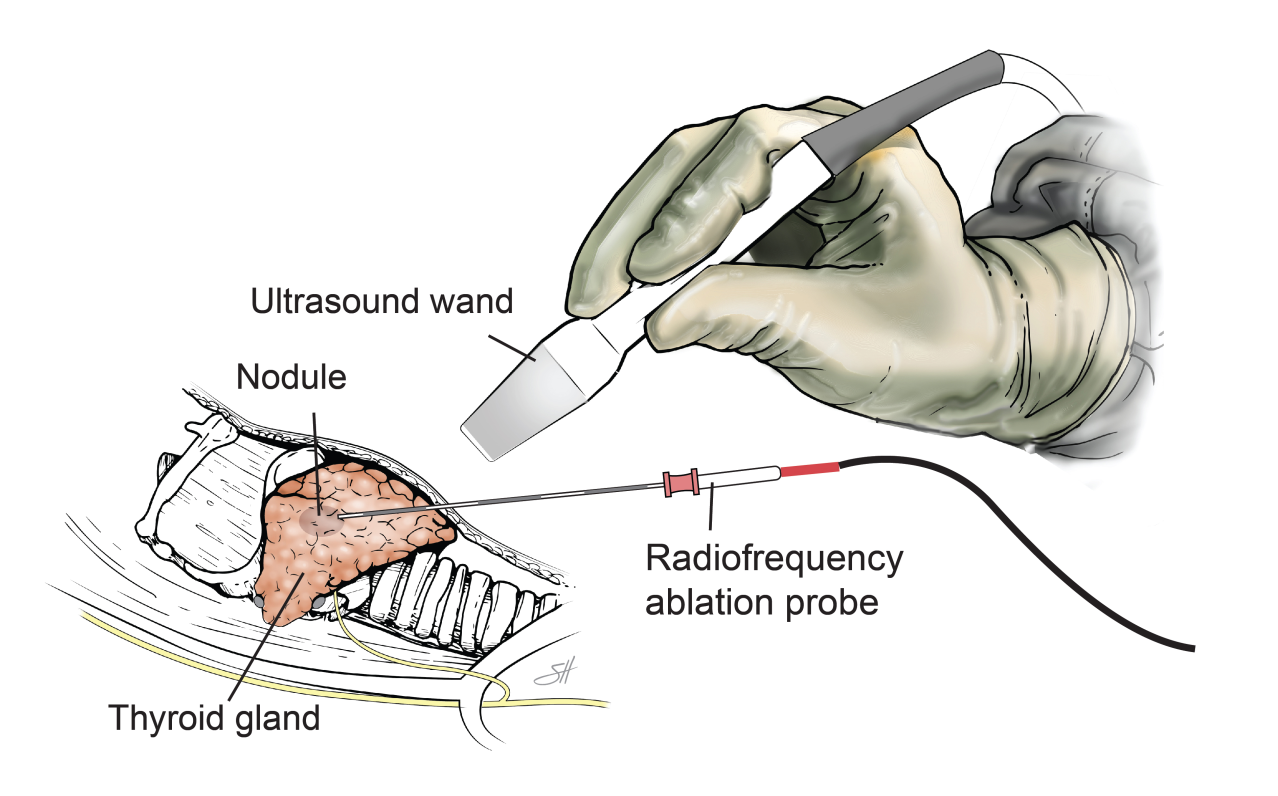
Thyroid Radiofrequency Ablation is a minimally invasive, non-surgical procedure designed to reduce the size of thyroid nodules and relieve associated symptoms. Using real-time ultrasound guidance, your physician precisely locates the nodule and inserts a thin needle electrode directly into it. A radiofrequency generator then delivers a carefully controlled amount of energy through the electrode, generating targeted heat that causes the nodule tissue to degenerate. Over the following weeks and months, the body’s immune system naturally eliminates the treated tissue, and the nodule gradually shrinks.
The procedure is performed under local anesthesia on an outpatient basis. No general anesthesia is required, there is no surgical incision, and most patients return to normal daily activities almost immediately.
Why Choose Thyroid RFA Over Surgery?
Traditional thyroid surgery, while effective, may result in visible scarring and carries the risk of long-term consequences, including hypothyroidism, particularly if a significant portion of the gland is removed. Patients who undergo thyroid surgery often require lifelong thyroid hormone replacement therapy.
Thyroid RFA offers a compelling alternative by treating only the problematic nodule while leaving surrounding healthy thyroid tissue intact. This allows the thyroid gland to continue functioning normally without the need for ongoing medication in most cases.
Benefits of Thyroid RFA
- Preserves healthy thyroid tissue and supports continued normal thyroid function
- Minimally invasive — performed through a thin needle, not an open incision
- Conducted under local anesthesia; no general anesthesia required
- Outpatient procedure with no hospitalization
- Minimal recovery time — most patients resume regular activities the same day
- No visible scarring
- Gradual, sustained reduction in nodule volume
- Low complication rate
What to Expect During the Procedure
You will be asked to lie with your head resting on a small cushion with your neck gently extended. Two grounding pads will be placed on your thighs, and the skin over the treatment area will be cleaned and prepared. Local anesthesia will be administered around the thyroid to minimize discomfort. Throughout the procedure, you will remain awake and able to breathe, swallow, and speak normally.
Your physician will insert a thin needle electrode directly into the nodule under continuous ultrasound guidance. Radiofrequency energy is then delivered to ablate the nodule tissue in real time. Your doctor will check in with you throughout the procedure and can make adjustments if you feel any discomfort. Upon completion, a small bandage is applied to the treatment site, and ice packs may be used to cool the area.
What to Expect After the Procedure
You will be monitored briefly before being discharged. Please discuss with your physician beforehand whether you are able to drive yourself home. Most patients are able to resume their normal activities almost immediately.
The body’s immune system begins breaking down the treated nodule tissue in the days following the procedure. Most patients notice a visible reduction in nodule size within two to three weeks. On average, nodule volume decreases by 40–60% within three months, and by 60–90% within one year. Patients commonly report significant relief from symptoms such as difficulty swallowing, throat pressure, and visible neck swelling.
Risks and Considerations
All treatments and procedures carry inherent risks, which your doctor will discuss with you in detail prior to proceeding.
Minor complications may include temporary skin irritation, bruising, or nausea.
Major complications are uncommon but can include nodule rupture resulting in localized infection, or temporary changes in voice. The risk of permanent vocal cord nerve injury is less than 1%.
Larger nodules may require more than one treatment session to achieve optimal reduction. Your physician will evaluate this during your initial assessment and discuss the likelihood of additional treatments with you.